Blog

  • How Do You Impress a Technical Interviewer?

    Impressing a technical interviewer isn’t about showcasing perfection — it’s about demonstrating how you think, how you solve, and how you respond under pressure.

    1. Master the First 10 Minutes

    The initial few minutes set the tone. Come prepared to:

    • Walk through your resume with clarity and confidence.
    • Highlight one or two impactful projects — but focus on the “why” and “how,” not just the “what.”
    • Speak briefly but be open to deep dives — they will probe.

    For instance, instead of saying “I used Python for data analysis,” say,
    “I used Python (pandas and NumPy) to clean 500k+ rows of noisy data, reducing computation time by 30%. I also wrote a regex parser to extract anomalies — which helped our QA team flag hidden bugs.”
    This shows thought, ownership, and results.

    2. Think Aloud During Problem Solving

    Most candidates go silent while solving problems. Big mistake.

    Verbalizing your thought process helps the interviewer:

    • Understand your logic flow.
    • Catch your assumptions early.
    • Nudge you, if needed, without penalizing.

    If you’re stuck, don’t freeze. Say:
    “Here’s one brute-force approach I can think of, though I know it’s not optimal. I’ll write it down and then try to optimize.”
    This builds rapport — you’re not afraid to be vulnerable, and that earns respect.

    3. Be Precise, Not Flashy

    You don’t need to know every algorithm. What matters is:

    • Accuracy in basics: data types, complexity, edge cases.
    • Correct use of terminology — don’t call a list a stack unless it behaves like one.
    • Clean, readable code — no messy shortcuts.

    Many interviews are not “pass/fail” on correctness alone — they judge your approachability as a teammate. Are you someone they’d trust in production-level decision making?

    4. Ask Sharp, Not Generic Questions

    When given a chance to ask questions, skip the fluff. Impress with questions like:

    • “What’s the toughest bug the team has faced recently?”
    • “How do code reviews typically work here?”
    • “What’s your deployment pipeline like?”

    This flips the interview: now you’re evaluating them — respectfully.

    Final Word

    To impress a technical interviewer:

    Focus less on sounding smart, and more on being clear, structured, and real. And if you’re serious about leveling up, tools like AIPrepX simulate real technical rounds with voice-based AI interviewers, letting you practice, review, and improve.


  • What Are the Fundamentals You Should Know Before a Technical Interview? — Part 2

    Missed Part 1? Read it here:
    https://blog.aiprepx.com/uncategorized/what-are-the-fundamentals-you-should-know-before-a-technical-interview-part-1/

    Part 1 focused on one truth: you can’t fake depth. Whether it’s choosing merge sort for large datasets, designing a noise-reducing amplifier, or applying Raoult’s Law in a non-ideal system—what matters is not just knowing concepts, but knowing how and when to apply them.

    The technical round is not a test of memory. It’s a test of method. The interviewer doesn’t expect you to know everything — but they expect you to think like an engineer, a scientist, a builder.

    When you’re given a problem, your first instinct must be to structure it. Not solve. Structure. What’s given? What’s missing? What’s the constraint? What’s the assumption? You’re not solving yet — you’re mapping the terrain.

    If you don’t know the answer, don’t panic. Start breaking it down. If it’s a system design question, simplify it to its skeleton. If it’s a numerical question, express it symbolically. Even if you freeze, speak — because how you think aloud often matters more than whether you reach a final answer.

    Adaptability is what they’re after. The moment you solve something, they will change the input, tweak the output, shift the context. The real question is: can you follow the problem when it moves?

    This is where most candidates collapse — they learn answers, not thinking. They prepare solutions, not strategies. But interviews reward those who prepare to be uncomfortable, who train for incomplete data, who simulate confusion — and then calmly navigate through it.

    Every project you’ve worked on is a vault of insight. Don’t just say what you built — revisit why you made the choices you did. Could it have been done better? Under what constraint? If given 1/10th the budget, what would you remove first?

    And most importantly, don’t just solve questions. Review them deeply. Why did this solution work? Could it have failed? What would have broken if a single assumption changed? This post-processing is where actual growth happens.

    Final Thoughts

    The technical round is not about being right — it’s about being ready. Ready to reason, ready to break down, ready to rebuild. If Part 1 was about owning your fundamentals, Part 2 is about turning them into fluid, agile thought under pressure.

    Preparation isn’t repetition. It’s reflection. Simulation. Strategic discomfort.
    And every time you embrace it — you get sharper.

    Power Your Preparation with AIPrepX

    AIPrepX helps you simulate real technical interview conditions — voice-based Q&A, dynamic problem statements, domain-specific challenges, and personalized feedback. Whether you’re preparing for your first job or your dream role, AIPrepX gives you the thinking space to fail, reflect, and grow — before the real interview begins.

    Try it. Train in discomfort. Show up sharp.

  • What Are the Fundamentals You Should Know Before a Technical Interview? — Part 1

    A technical interview is not just a question-and-answer session. It’s a deep-dive conversation that reveals how well you understand your subject, how you apply it, and how you think when the problem isn’t textbook-clear. It’s where theory meets application — and clarity becomes your biggest strength.

    Before you even step into a technical interview, you need to realize one key truth: surface-level knowledge won’t carry you far. You may have completed projects, attended labs, even scored well in exams — but in a technical round, the interviewer is looking for depth. That means you must not only recall what a formula does, but why it works, where it breaks, and how it connects to the bigger picture.

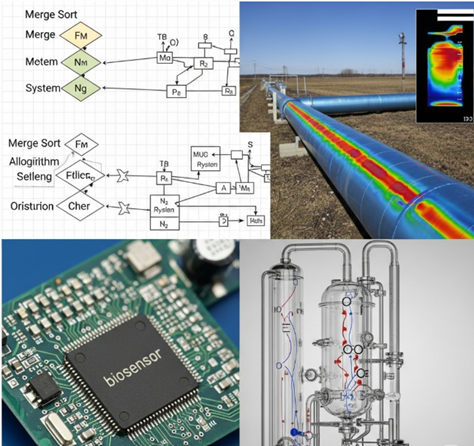
    Take this for example: being able to recite a sorting algorithm isn’t impressive. Being able to explain why you’d choose merge sort over quicksort when working with large datasets on a multi-threaded system — that shows real understanding. Or say you’re from a mechanical engineering background — defining thermal conductivity is fine, but being asked how you’d minimize heat loss in a pipeline under cost constraints? That’s when real application begins.

    In electronics, it’s one thing to know how an op-amp works. But can you explain how you’d design a noise-reducing amplifier circuit for a biosensor? In chemical engineering, knowing Raoult’s law is expected — but applying it to model a distillation column behavior, or explaining what assumptions break down in a non-ideal mixture? That’s where your fundamentals shine.

    This means your fundamentals must be solid. They’re your tools. You can’t build or debug anything effectively if you don’t trust the tools you’re using. And no matter how advanced a question seems, interviewers almost always trace it back to first principles — the building blocks of your technical thinking.

    You’ll be surprised how often the questions are deceptively simple:

    • “What happens inside a transistor when you switch it on?”
    • “Why does increasing the sample rate improve signal resolution?”
    • “How would you estimate power loss in this system?”

    They don’t want fancy jargon — they want logical thinking, structured answers, and conceptual clarity.

    So, the takeaway from Part 1 is simple but powerful:
     Know your core concepts, not just to define them — but to use them.
    Think in terms of logic, not memorization.
    Prepare not to recall — but to reason.

    Understanding concepts is just the beginning. In Part 2, we dive deeper — not into more content, but into how to think, structure, and respond in a live technical round. If Part 1 was about what to know, Part 2 is about how to perform when it counts.

    Read Part 2 here: https://blog.aiprepx.com/uncategorized/what-are-the-fundamentals-you-should-know-before-a-technical-interview-part-2/

  • What is “Technical Round” in Interviews? And How Can AIPrepX Help You Ace It?

    Whether you’re a fresh graduate gearing up for campus placements or a jobseeker aiming for your dream company, the technical round is a critical milestone in any hiring process—especially in engineering, science, and IT roles.

    But what exactly is the technical round? Why does it matter so much? And how do you prepare for it effectively? Let’s break it down.

    What is a Technical Round?

    The technical round is a stage in the interview process where the subject knowledge, problem-solving skills, and technical communication are evaluated. It is typically conducted by a domain expert, not an HR manager, and can take various forms:

    • Written/Online Test (Aptitude, Coding, Domain MCQs)
    • Technical Interview (In-person/Virtual, verbal Q&A)
    • Hands-on Task (Coding on the spot, system design, hardware simulation)
    • Project Discussion (Your final-year project, internships, certifications)
    • Whiteboard Problem Solving (Algorithm or architecture building live)

    This round determines whether you can do the job technically—not just talk about it.

    What Do Interviewers Look For?

    In a technical round, interviewers assess:

    • Core Subject Knowledge (e.g., Data Structures, Thermodynamics, Circuits)
    • Analytical Thinking and Approach
    • Coding or Simulation Proficiency
    • Understanding of Past Projects
    • Application of Concepts to Real Problems
    • Clarity in Communication of Technical Ideas

    Why Do Many Students Struggle Here?

    ❌ Rote learning without conceptual understanding

    ❌ Lack of practice in articulating answers

    ❌ Nervousness during one-on-one interviews

    ❌ No exposure to voice-based, real-time simulations

    ❌ Not enough feedback on where they go wrong

    That’s where AIPrepX comes in.

    How AIPrepX Adds Value to Your Technical Round Preparation

    AIPrepX is not just a test platform—it’s your personalized AI mentor that mimics the real technical interview experience. Here’s how:

    1. Voice-Based Technical Interviews

    Our AI simulates live technical interviews, asking verbal questions the way an actual interviewer would. This helps students practice thinking and speaking under pressure—a skill often overlooked.

    2. Customized Domain-Specific Questions

    Whether you’re from Mechanical, CS, ECE, Chemical, or Biotechnology, AIPrepX generates questions tailored to your field and current curriculum trends.

    3. Real-World Scenario-Based Design Questions

    Struggling with open-ended questions like “How would you design an elevator system?” AIPrepX walks you through frameworks to approach such problems logically.

    4. AI-Powered Feedback

    Get instant feedback on your technical answers—identify filler words, missed concepts, unclear logic, or subject gaps.

    6. Project-Based Q&A Practice

    AIPrepX will simulate an interviewer questioning you on your project’s depth, relevance, and results.

    Final Words

    The technical round is not about remembering everything, but about demonstrating how you think and solve. With AIPrepX, you don’t just prepare—you simulate, practice, and progress.

    Are You Ready to Crack Your Technical Round?

    Join thousands of students preparing smarter with AIPrepX.

    Practice with Purpose. Prepare with AIPrepX.

  • Train, Track, Practice -How Can Institutions Use AIPrepX to Boost Placement Rates?

    In today’s hyper-competitive job landscape, a college’s placement record isn’t just a metric — it’s a reputation. Students and parents look beyond rankings and infrastructure; they want to know, “Will this college help me get a good job?” For placement cells and training coordinators, the challenge is twofold: preparing hundreds of students efficiently and ensuring each one is ready for real-world interviews.

    This is where AIPrepX makes a difference.

    AIPrepX is an AI-powered interview preparation platform that simulates real interview rounds — including Aptitude, HR, and Technical — using voice interaction and intelligent feedback systems. For colleges, it’s more than just a tool. It’s a strategic partner in improving placement outcomes.

    Here’s how.

    Real Interview Simulation — At Scale

    Traditional mock interviews are limited by time, availability of HR professionals, and scalability. AIPrepX breaks this barrier. Students can practice interviews anytime, from anywhere — using their voice. The platform mimics actual recruiter interactions with:

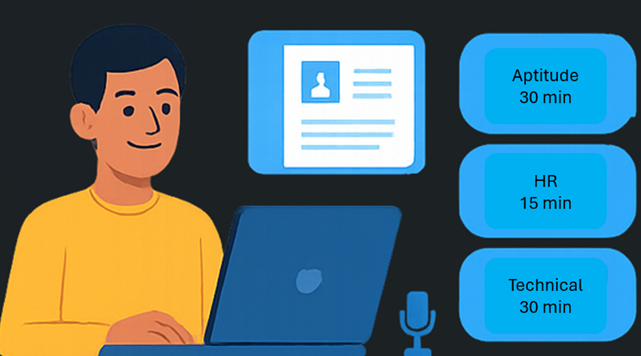
    • 30-minute Aptitude Round (MCQ- based)
    • 15-minute HR cum behavioral (Voice – based) Round and
    • 30-minute Technical Round

    Each round is tailored to the student’s resume and chosen job description.

    Why AIPrepX Excels in Scalability: Unlike traditional methods that rely on limited human resources, AIPrepX can simultaneously run thousands of unique interview simulations. This ensures every student receives ample practice, not just a select few, leading to consistent and widespread readiness across batches.

    Actionable, Personalized Feedback

    AIPrepX doesn’t just simulate interviews — it diagnoses performance. The platform generates a rich feedback report that includes:

    • STAR Method Assessment (for behavioural questions)
    • SWOT Analysis (to highlight strengths and blind spots)
    • Gap Report (skills missing based on JD comparison)

    These analytics give students clear direction, and allow placement officers to monitor readiness across batches

    Targeted Training, Not Guesswork

    Instead of training all students uniformly, AIPrepX helps identify who needs support — and in what area. For example:

    • Student A has strong technical knowledge but weak HR communication
    • Student B is apt at aptitude but struggles with resume-job alignment
    • Student C is job-ready but lacks confidence in spoken delivery

    This data allows trainers to personalize interventions — saving time and increasing impact.

    College-Level Benefits

    For institutions, AIPrepX delivers measurable advantages:

    • Higher placement conversion due to better-prepared candidates
    • Improved student confidence and reduced interview anxiety
    • Readiness benchmarking before actual company interviews
    • Digital certification and report sharing to strengthen student portfolios
    • Valuable data for placement and training strategy optimization

    Seamless Integration for Placement Teams

    AIPrepX can be integrated into the college’s training calendar or pre-placement module. Placement teams receive access to:

    • Batch-wise performance dashboards
    • Student readiness reports
    • Common gaps and improvement areas
    • Recommendation lists for company-specific prep
    • Whether you’re training 50 or 500 students, AIPrepX scales with you — efficiently and intelligently.

    Future-Proofing Your Campus

    In an era of automation, voice-based hiring, and online assessments, interview preparation must evolve. AIPrepX aligns with industry expectations and recruiter patterns. It helps colleges not just meet the standard — but exceed it.

    By empowering students with realistic simulations and smart feedback, AIPrepX ensures they walk into interviews with clarity, confidence, and competence.

    Ready to Try?

    Placement teams can sign up for a pilot batch or institutional demo at www.aiprepx.com. Experience how simulation + feedback = stronger placements.

    Because a confident candidate is a converted candidate — and that’s what every college aims for.

  • Mastering the Three Rounds of AI Interviews with AIPrepX

    In a world where time is limited and expectations are high, interview preparation needs to be smart, structured, and aligned with how real-world hiring works. That’s why AIPrepX is built around a focused, three-round simulation framework that mirrors the most common stages in today’s corporate hiring pipelines: Aptitude, HR, and Technical.

    Each round in AIPrepX is time-bound, adaptive, and designed to bring out specific competencies in a candidate — helping you not just prepare for the process, but perform with purpose.
    Let’s break down each round, its timing, and why it matters.

    Round 1: Aptitude Assessment
    Duration: 30 minutes
    Focus Areas: Logical reasoning, quantitative ability, pattern recognition, basic verbal skills .

    The Aptitude round is often the first filter in recruitment processes, especially in campus drives and volume hiring. It helps assess how you think, how you handle time-bound problem solving, and whether you have the foundational skills to perform in a dynamic workplace.

    In AIPrepX, this round is auto-generated based on your resume and the job description you upload. The AI selects the most relevant question types and tracks your accuracy, response speed, and consistency.

    Why it matters: Aptitude is the gateway. Performing well here opens the door to deeper evaluation. It also helps you gauge your core preparedness and where you stand among your peers.

    Round 2: HR (Behavioral) Interview
    Duration: 15 minutes
    Focus Areas: Communication, confidence, teamwork, leadership, adaptability.
    The HR round goes beyond technical skills — it’s about who you are as a person. Can you work in a team? Are you self-aware? How do you react to challenges? This round is conducted via AIPrepX’s
    voice-based AI, which simulates real HR scenarios and listens to your responses in real time.

    The AI evaluates your answers using the STAR method (Situation, Task, Action, Result), detects filler words, measures pacing, and even assesses the relevance of your examples to the job description.
    Why it matters: Your soft skills, clarity of thought, and emotional intelligence often determine cultural fit — and whether you move to the final round.

    Round 3: Technical Interview
    Duration: 30 minutes
    Focus Areas: Domain knowledge, problem-solving, technical reasoning, real-world application. This is where you showcase your expertise. AIPrepX’s technical round is designed to reflect role specific scenarios — whether you’re a software developer, chemical engineer, business analyst, or designer.
    Through voice-based interactions and case questions, you’ll be asked to explain how you approach problems, structure solutions, and justify decisions. The AI analyzes how confidently and clearly you articulate technical concepts.

    Why it matters: This round determines if you’re job-ready. It’s not just about knowing the answer — it’s about communicating your thought process.

    Why Three Rounds?


    This triad — Aptitude, HR, and Technical — forms a balanced framework to assess both hard and soft skills. It reflects how most real-life interviews are structured and allows AIPrepX to generate deep, multi-dimensional feedback.
    Each round is adaptive, meaning the questions and evaluation evolve based on your resume, JD, and response patterns. You’re not getting a generic quiz — you’re getting a tailored simulation designed to help you grow.

    The AIPrepX Advantage

    • Practice each round individually or sequentially
    • Receive round-wise performance reports
    • Get improvement suggestions per round (e.g. “More quant-based practice,” “Elevator pitch
      clarity,” “Use STAR in behavioral answers”)
    • Track progress across multiple attempts

    Final Thoughts
    Mastering interviews takes more than luck — it takes practice, reflection, and refinement. With AIPrepX’s three-round simulation framework, you’ll experience every stage of a real interview
    pipeline and come out stronger each time.

    So if you’re ready to move beyond passive prep and engage in smart, voice-driven, data-backed simulation, start your journey today at: www.aiprepx.com

    Because every great career begins with a great interview — and great interviews start with AIPrepX.

  • Voice-Based AI Interviews: Why They Matter — and How AIPrepX Uses Them to Elevate CandidateReadiness?


    Recruitment is changing fast. Remote hiring, high applicant volume, and the shift toward skills- and competency-based evaluation are pushing interview processes to evolve. Yet many candidates still practice in silence—reading question lists, rehearsing mentally, or typing model answers.

    The problem? Real interviews are spoken. Tone, timing, clarity, and confidence matter just as much as content. This is where voice-based AI interviews make a meaningful difference. By allowing candidates to speak their answers in a simulated, adaptive environment, AIPrepX brings practice closer to reality
    and turns every response into structured learning.

    What is Voice-Based AI Interview?
    A voice-based AI interview simulates a live interaction where the system asks questions (through audio) and the candidate responds verbally. The AI captures speech, transcribes it, analyzes
    structure, content, delivery, and behavioural signals, and provides feedback mapped to interview standards (e.g., STAR, or communication markers).

    In AIPrepX, the HR and Technical rounds leverage voice AI to evaluate how candidates think out loud, respond under time constraint, and articulate ideas clearly—key factors in actual interviews.

    Why Voice Matters in Interview Preparation?

    1. Realistic Practice
      Speaking responses conditions you for the live interview setting—managing nerves, pacing your
      delivery, and structuring thoughts on the fly.
    2. Communication & Clarity Assessment
      Interviewers don’t read your thoughts; they hear your words. Voice-based practice surfaces filler
      words, run-on responses, monotone delivery, or unclear explanations.
    3. Behavioral Signal Capture
      Pauses, hesitations, self-corrections, and confidence in tone provide rich signals beyond content. AI
      can flag areas where coaching improves fluency and executive presence.
    4. Structured Feedback at Scale
      Unlike mock interviews that depend on human availability, AI can evaluate thousands of spoken
      responses consistently ideal for campus drives, skilling programs, and early talent pipelines.
    5. Faster Iteration
      You can attempt multiple practice rounds in less time, track progress, and refine specific answer
      types (e.g., “Tell me about a challenge…”).
    6. Interview Readiness Across Languages & Accents
      Voice AI can help non-native English speakers practice pronunciation, clarity, and comfort speaking
      professionally—critical in global job markets.

    How Voice-Based AI Works Inside AIPrepX?
    After you upload your resume and target job description, AIPrepX builds a personalized interview path.

    When you begin the HR or Technical round:

    1. AI Prompts You by Voice – Behavioral, situational, or role-specific technical questions are
      delivered dynamically.
    2. You Respond Verbally – Speak naturally into your mic (desktop or mobile).
    3. Speech-to-Insight Pipeline
      > Speech recognition converts your response to text.
      > Scoring models analyze content quality, structure (STAR detection), domain depth, and clarity.
      > Paralinguistic cues (length, hesitations, filler density) are logged.
    4. Adaptive Follow-Ups – Based on your answer depth, AI may probe: “Can you elaborate on the result?” or “What was your direct role?”
    5. Feedback Layer – Your response is mapped to competencies: communication, ownership, problem solving, technical reasoning, and professional tone.

    Why Employers Value Voice-Ready Candidates?
    Hiring teams increasingly recruit virtually—phone screens, video rounds, panel calls. Candidates who can:

    • Communicate clearly under time pressure
    • Structure responses using STAR or problem-action-result logic
    • Demonstrate domain credibility by voice tend to advance further in hiring funnels. Practicing with voice AI puts you in that group.

    The Significance of Voice AI in AIPrepX’s Design:
    Voice isn’t an add-on—it’s core to the AIPrepX value proposition:

    • HR & Technical Rounds Simulated by Voice: Practice what you’ll face in actual screening calls.
    • Adaptive Probing: If your answer is thin, the AI follows up—just like a real interviewer.
    • Consistent Scoring Across Cohorts: Ideal for universities, training centers, and internal talent programs.
    • Scalable Feedback Loops: Hundreds of students can practice in parallel and get individualized reports.
    • Integration with STAR, SWOT & Gap Reports: Spoken content feeds directly into structured evaluation and personalized development plans.

    Best Practices for Candidates Using Voice AI in AIPrepX

    • Use a quiet space and test your microphone.
    • Start with practice prompts to get comfortable speaking aloud.
    • Pause briefly before answering — collect your thoughts.
    • Use STAR for behavioral and a problem-solution-impact flow for technical answers.
    • Review feedback to reinforce improvement.

    Final Take
    Voice-based AI interviews move preparation from passive reading to active performance. With AIPrepX, you don’t just know the answer — you say it, refine it, and own it.
    If you’re preparing for campus placements, career transitions, or high-stakes interviews, now is the time to put your preparation into practice.

    Get started at www.aiprepx.com and experience voice-driven interview readiness today.

  • Understanding the STAR Method — and Its Role in AIPrepX

    When it comes to answering behavioral interview questions, even the most qualified candidates often struggle to structure their thoughts effectively. Rambling responses, vague storytelling, or
    missing the main point — these common pitfalls can cost you the opportunity, even if your experience is strong.

    That’s where the STAR method comes in — and at AIPrepX, it plays a central role in how we evaluate and enhance your interview performance.

    What is the STAR Method?

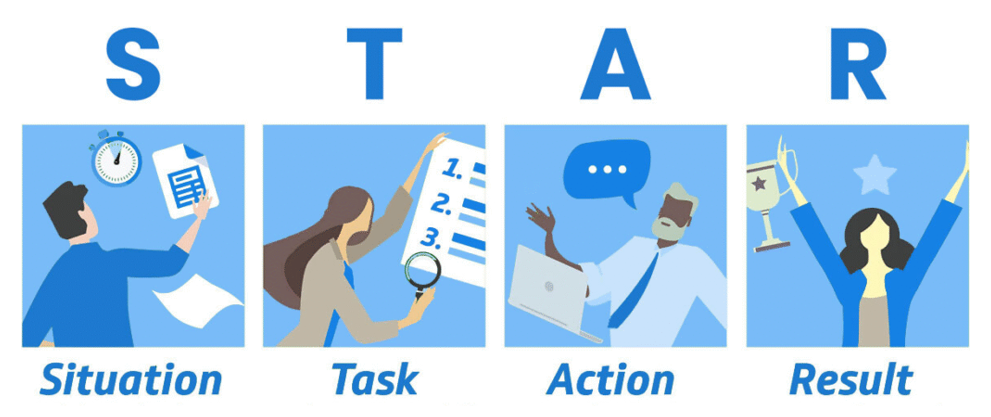
    STAR stands for:
    S — Situation: Set the context. Where were you? What was the background?
    T — Task: What was your responsibility or goal?
    A — Action: What did you do? How did you do it?
    R — Result: What was the outcome? What did you learn or achieve?

    This structured format is widely recommended by recruiters and hiring managers, especially for competency-based or behavioral interviews. It helps candidates stay focused, demonstrate impact,
    and communicate clearly.

    How AIPrepX Uses STAR?
    In AIPrepX, the STAR framework is built into the evaluation engine for HR and scenario-based technical questions. When you respond to a prompt like “Tell me about a time you handled conflict
    on a team,” our voice AI listens for:

    1. Whether you framed the situation clearly,
    2. If your task or goal was explicitly defined
    3. How you articulated your actions
    4. And whether the result was meaningful and measurable.

    What’s more, AIPrepX doesn’t just score your response — it breaks it down. You receive feedback on where you met STAR criteria and where you fell short, along with suggestions to strengthen your
    storytelling.

    Why STAR Matters?
    In today’s interviews, especially for roles in leadership, consulting, product management, and client facing domains, the ability to communicate with structure and clarity is just as important as the
    content itself.

    The STAR method ensures that your responses:

    1. Highlight your skills in context
    2. Show your thought process and initiative
    3. Emphasize outcomes and results
    4. Leave a memorable impression

    By practicing with AIPrepX, you don’t just become familiar with STAR — you master it. Over time, your responses become sharper, more confident, and tailored to what interviewers are actually
    listening for.

    Final Thoughts
    The STAR method isn’t just a template — it’s a mindset shift. And with AIPrepX, that mindset is reinforced through every mock interview, every report, and every feedback loop. So if you’ve ever stumbled through a “Tell me about a time…” question, AIPrepX is here to help you turn your experiences into compelling, structured stories — the kind that get remembered.

    Visit www.aiprepx.com and experience the power of STAR-aligned feedback today.

  • What is a SWOT Analysis — and Why It Matters in AIPrepX?

    In the fast-evolving job market, self-awareness is one of the most powerful tools a candidate can possess. While technical skills and aptitude are essential, understanding your own strengths and
    weaknesses — and how they align with the demands of a role — can make the critical difference between a good interview and a great one

    .
    One framework that helps bring this clarity is the SWOT analysis. In AIPrepX, SWOT is not just a corporate planning tool — it’s a personalized reflection of your interview readiness.

    So, what exactly is a SWOT analysis?


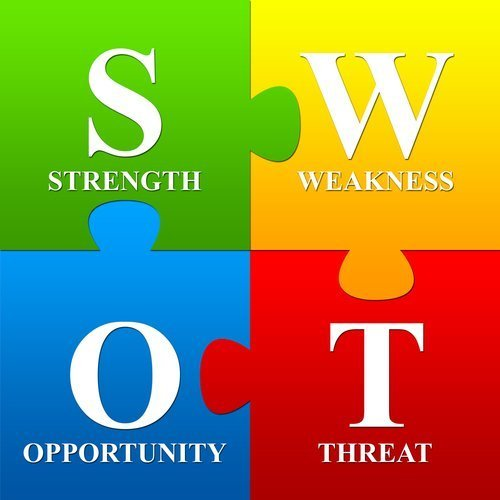
    SWOT stands for:
    S Strengths: What you do well, the skills and qualities that set you apart
    WWeaknesses: Areas where you may need improvement or added support
    OOpportunities: External factors you can leverage — like emerging roles or technologies
    T Threats: External challenges or gaps that could hinder your performance


    Traditionally used in strategic planning, the SWOT framework is now being applied to personal and professional development — and AIPrepX takes this to the next level.

    How AIPrepX Uses SWOT?
    After your simulated interview rounds, AIPrepX’s AI engine evaluates your verbal responses, behavioral cues, content depth, and role fit. Based on these insights, it generates a personalized SWOT analysis, giving you a strategic view of your readiness.

    Here’s what that looks like:
    Your Strengths might include clarity of communication, domain knowledge, or poise under pressure. Weaknesses could flag hesitations, vague examples, or a lack of role-specific context.
    Opportunities often point to your adaptability, learning mindset, or potential fit in adjacent job roles. Threats highlight possible mismatches — like insufficient technical detail or unfamiliarity with core job requirements.

    Why It Matters?
    A SWOT analysis provides more than just feedback — it gives direction. Instead of wondering where you stand, you get a structured, honest assessment that helps you make informed decisions.

    In summary, the SWOT report in AIPrepX bridges the gap between practice and strategic self awareness. It’s about more than preparation — it’s about preparation with purpose. So before your next big interview, let AIPrepX help you understand not just how ready you are — but where your greatest opportunities for growth lie.

  • REVOLUTIONIZING INTERVIEWPREPARATION: HOW AIPREPXEMPOWERS TODAY’S JOBSEEKERS?

    In an era where competition for job roles is at an all-time high, traditional methods of interview preparation are no longer enough. Today’s candidates are expected to be sharper, more confident, and equipped with not just knowledge, but strategy. Enter AIPrepX: a next-generation AI-powered interview simulator built to fast-track career success.

    AIPrepX was developed with a singular goal — to bridge the gap between practice and performance. Instead of rehearsing static questions or relying on generic preparation books, candidates can now engage with a dynamic, voice-based mock interview
    experience that mirrors real-world recruitment scenarios.

    The process begins with a simple upload of your resume and the job description for the role you’re targeting. From there, AIPrepX personalizes your entire interview journey. The platform guides you through three core rounds: Aptitude (30 minutes), HR (15 minutes), and Technical (30 minutes). The Technical and HR rounds are powered by voice AI, and each round is driven by adaptive algorithms, making the experience immersive and realistic.

    What sets AIPrepX apart is the depth of feedback it offers. Immediately after the interview, candidates receive comprehensive reports featuring STAR-based response evaluations, SWOT analysis, salary benchmarking, elevator pitch suggestions, and personalized gap reports. This data-driven feedback doesn’t just highlight areas for improvement — it gives candidates a strategic roadmap for growth.

    Beyond analysis, AIPrepX supports upskilling. It recommends curated learning paths to address identified weaknesses and even showcases job opportunities that align with a candidate’s strengths. And for those looking to share their progress, AIPrepX generates recruiter-ready performance certificates and feedback summaries — easily shareable via a secure, unique link.

    In essence, AIPrepX transforms interview preparation from a guessing game into a guided, intelligent process. It empowers candidates with clarity, confidence, and credibility — three qualities that hiring managers consistently seek. If you’re looking to elevate your preparation and make your next interview count, visit www.aiprepx.com and experience the future of interview readiness.