A technical interview is not just a question-and-answer session. It’s a deep-dive conversation that reveals how well you understand your subject, how you apply it, and how you think when the problem isn’t textbook-clear. It’s where theory meets application — and clarity becomes your biggest strength.
Before you even step into a technical interview, you need to realize one key truth: surface-level knowledge won’t carry you far. You may have completed projects, attended labs, even scored well in exams — but in a technical round, the interviewer is looking for depth. That means you must not only recall what a formula does, but why it works, where it breaks, and how it connects to the bigger picture.

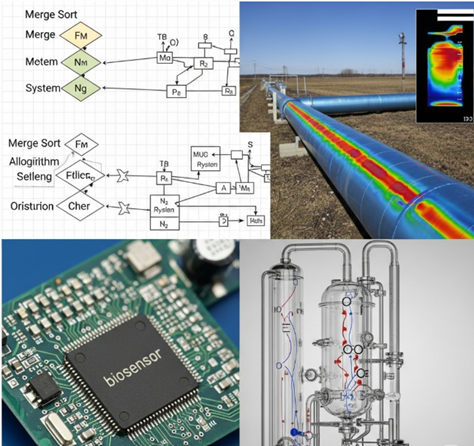
Take this for example: being able to recite a sorting algorithm isn’t impressive. Being able to explain why you’d choose merge sort over quicksort when working with large datasets on a multi-threaded system — that shows real understanding. Or say you’re from a mechanical engineering background — defining thermal conductivity is fine, but being asked how you’d minimize heat loss in a pipeline under cost constraints? That’s when real application begins.
In electronics, it’s one thing to know how an op-amp works. But can you explain how you’d design a noise-reducing amplifier circuit for a biosensor? In chemical engineering, knowing Raoult’s law is expected — but applying it to model a distillation column behavior, or explaining what assumptions break down in a non-ideal mixture? That’s where your fundamentals shine.
This means your fundamentals must be solid. They’re your tools. You can’t build or debug anything effectively if you don’t trust the tools you’re using. And no matter how advanced a question seems, interviewers almost always trace it back to first principles — the building blocks of your technical thinking.
You’ll be surprised how often the questions are deceptively simple:
- “What happens inside a transistor when you switch it on?”
- “Why does increasing the sample rate improve signal resolution?”
- “How would you estimate power loss in this system?”
They don’t want fancy jargon — they want logical thinking, structured answers, and conceptual clarity.
So, the takeaway from Part 1 is simple but powerful:
Know your core concepts, not just to define them — but to use them.
Think in terms of logic, not memorization.
Prepare not to recall — but to reason.
Understanding concepts is just the beginning. In Part 2, we dive deeper — not into more content, but into how to think, structure, and respond in a live technical round. If Part 1 was about what to know, Part 2 is about how to perform when it counts.
Read Part 2 here: https://blog.aiprepx.com/uncategorized/what-are-the-fundamentals-you-should-know-before-a-technical-interview-part-2/
Leave a Reply